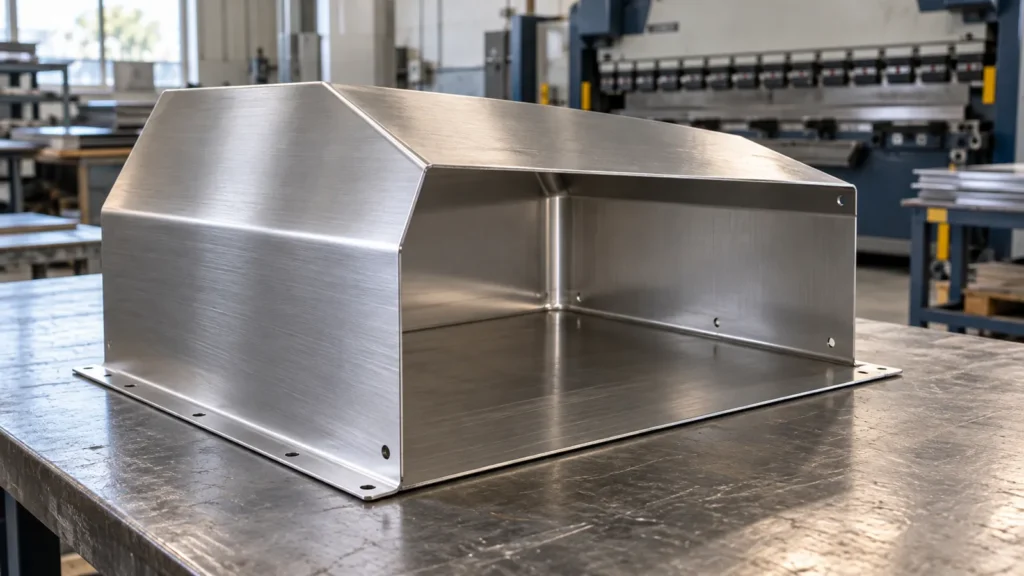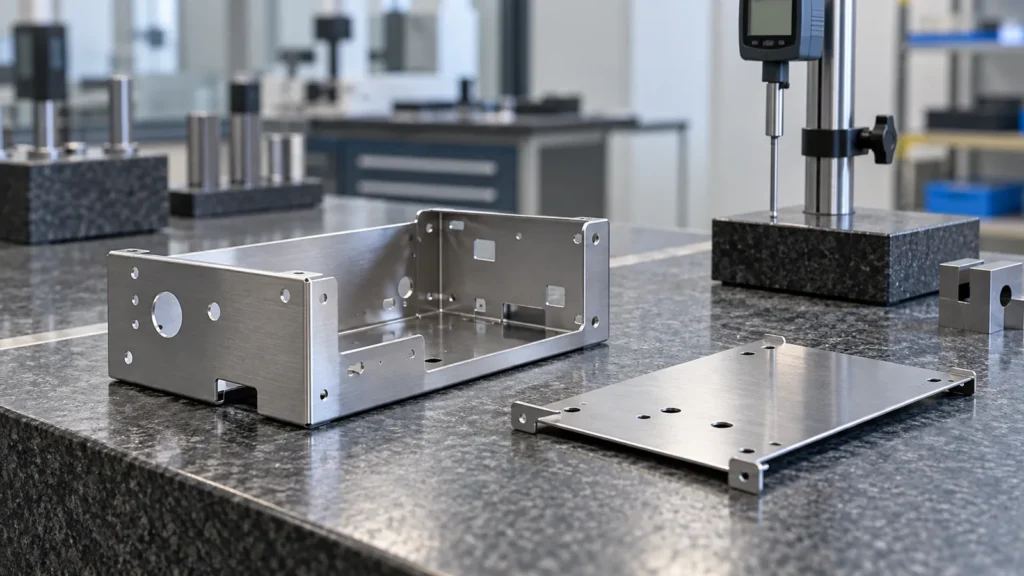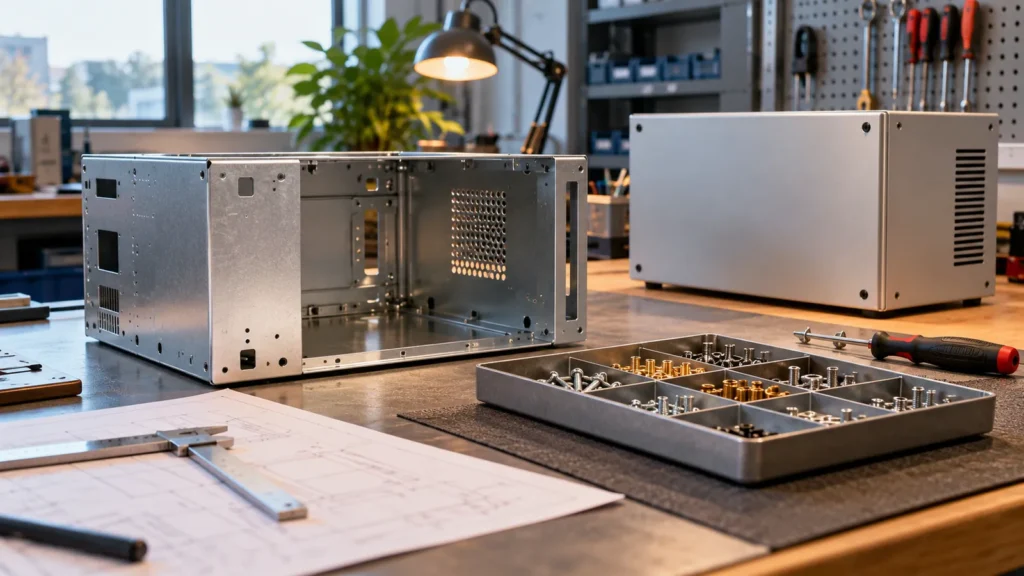
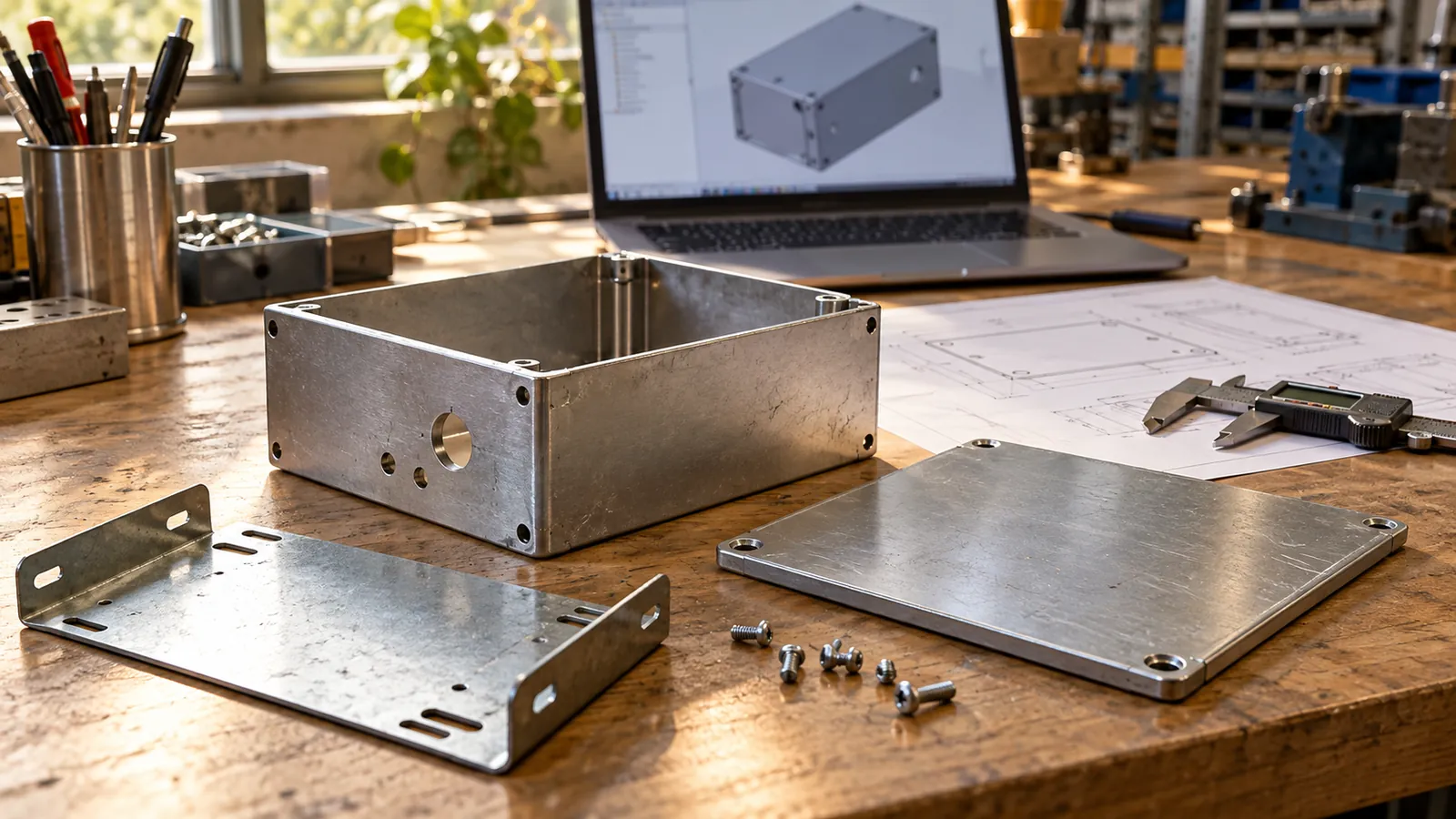
A sheet metal prototype is an initial fabricated part or assembly used to evaluate a design before a larger production commitment. It may check whether a cover fits, whether an assembly can be built or whether the selected construction performs as intended. The useful prototype is the one made to answer a defined question.
That question affects the material, manufacturing route, finishing and number of samples. An early enclosure used to check cable access does not need the same approval plan as a sample intended to represent the finished production assembly. Being clear about the difference saves both money and misleading conclusions.
Write the test before ordering the part
“Make one so we can have a look” is understandable at the start of a project. Before ordering, turn it into a small set of decisions. What must the team learn, and what would cause the design to change?
For an illustrative equipment enclosure, the evaluation might look like this:
| Question | What the sample needs to include | What to record |
|---|---|---|
| Can the module be installed? | Representative module, chassis and fastening arrangement | Entry path, interference and usable tool access |
| Does the cover fit? | Mating cover and frame in the relevant supplied condition | Seating, gaps and fastening alignment |
| Can the product be serviced? | Adjacent parts that restrict access | Removal sequence and required clear space |
| Does the finished appearance work? | Representative coating and visible interfaces | Agreed viewing conditions and appearance reference |
| Does it meet a performance requirement? | Construction and test setup appropriate to that requirement | Defined method, conditions, results and acceptance decision |
The table is a planning example, not a test specification. Its value is making the purpose visible before a sample arrives. It also identifies which customer-supplied parts or fixtures the evaluation will need.
Use the right level of physical representation
A cardboard or plastic model can help explore size, layout and reach. It cannot reproduce all the stiffness, bend behavior or joined construction of a metal assembly. Conversely, a fabricated metal sample is unnecessary if the immediate question is only whether a proposed envelope fits through an opening.
When the question concerns the finished metal part, material grade, condition and thickness become important. Substituting a convenient stock material may be acceptable for one geometry check while leaving the intended forming or functional behavior untested. Record that limit before approving the substitution.
Protolabs describes sheet metal fabrication as a way to evaluate function and material behavior before committing to higher upfront tooling investment. The practical point is to choose a representative route for the question being tested. Its quoted turnaround times and process limits belong to its service, not to every prototype supplier. Protolabs: sheet metal prototyping
ZhenPai includes prototype review within its manufacturing workflow. Discuss which features must represent the eventual product and which can remain provisional at the present stage.
Keep one revision in charge
The model, drawing and order should identify the same revision. A small hole move sent in an email can easily become detached from the rest of the design package, especially when the supplier has already prepared a flat pattern or forming program.
If a new revision is released, identify what changed and whether the previous one should still be made. State whether existing work may be used for an agreed trial or must be replaced. That is more useful than assuming the newest attachment will automatically replace every earlier instruction.
A supplier’s proposed manufacturing change also needs a decision. Moving a hole away from a bend or changing a relief may be sensible, but it can affect another component. Keep the approved change in the product record so the next order does not recreate the original problem.
For a new project, ZhenPai can review cutting and punching together with the forming and assembly requirements. The prototype package should describe the completed part, not only the easiest operation to quote.
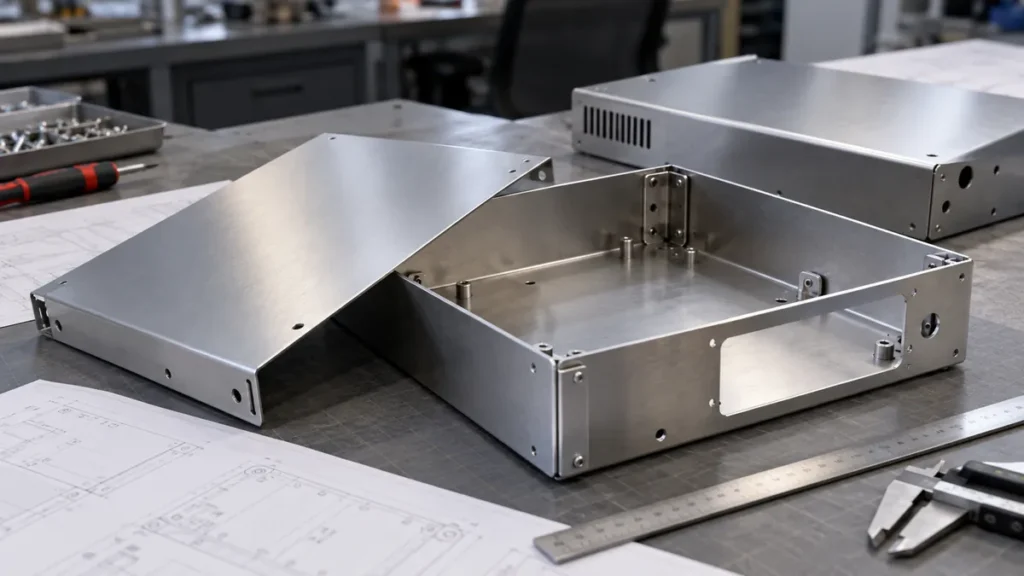
A part on its own can pass the wrong test
An isolated cover may measure correctly and still be difficult to use. Its fasteners may sit behind another component; its removal path may require space the installation does not provide. Bring the relevant surroundings into the evaluation.
For the enclosure example, fit the actual module or a representative substitute with its important interfaces defined. Include the intended connector and cable bend space if those affect access. A blank box with the correct outside dimensions cannot demonstrate those relationships.
Try the intended assembly sequence. If the module must enter before a cross-member is installed, record that order. If a fastener is reachable only before another panel is attached, decide whether the production assembly and later service procedure can accept it.
Do not repair every interference while testing and then call the original design approved. Mark each temporary change. A filed slot, removed washer or bent tab can be useful diagnostic evidence, but it has to lead to an agreed drawing or process decision.
Decide when finishing belongs in the prototype
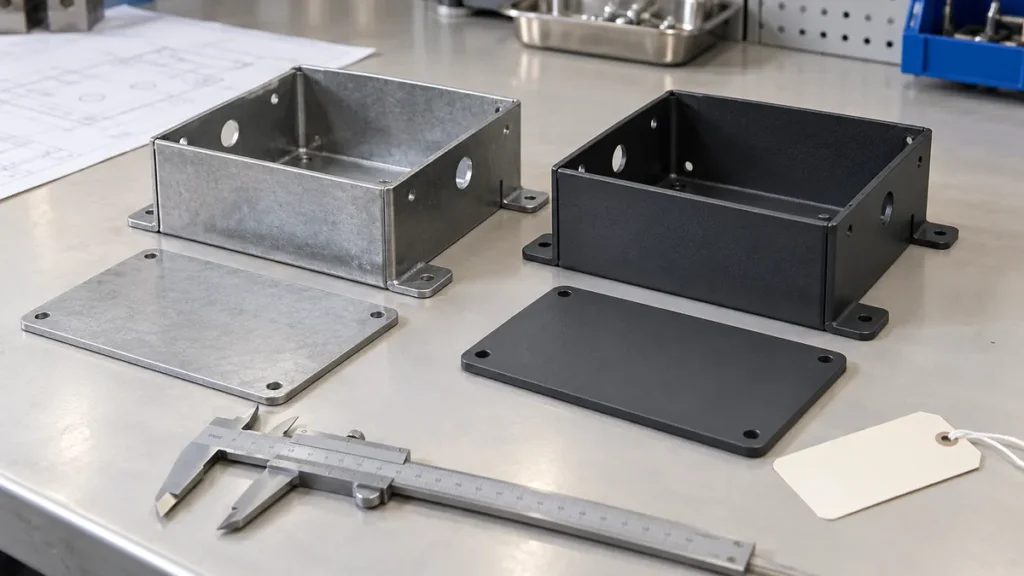
Some early fit checks can use bare metal. Others need the completed surface condition because the coating affects a close gap, hardware fit or visible joint. Make that choice from the evaluation purpose.
An appearance sample needs more than a convenient color. Include the relevant texture, gloss, adjoining parts and lighting condition. A small flat chip may help choose a finish while leaving the finished enclosure’s corners and broad surfaces unresolved.
Where sealing, electrical contact or repeated handling matters, include the relevant materials and contact areas in the trial. A substitute gasket or temporary protective layer changes the assembly being evaluated. If it is used, record which question it can and cannot answer.
This is also a useful point to review packaging. A thin return flange that arrives bent may produce an apparent fit problem unrelated to the design. Photograph the received condition and separate transit damage from manufacturing or geometry issues.
Close the loop before ordering more
After testing, sort the findings into decisions: accepted as evaluated, change required, or further evidence needed. Give each open issue an owner. A photograph with a circle around an interference is a starting point; the released correction should identify the dimension, geometry or assembly instruction that changes.
Retain the sample’s material, manufacturing route, finish and revision with the results. If production will use a different route, identify the features that need fresh approval. A cut-and-bent prototype does not automatically approve the details of a later stamped part.
Discuss first-part measurements and the records needed for the next stage during the quality-control review. One sample can demonstrate a particular result; evidence of consistency across a production run needs a separate plan appropriate to the project.
Prototype price also needs context. Programming, setup and first-part work may be spread over very few pieces. Multiplying that unit price by a future production quantity can give a poor forecast. Request a separate production quotation against the settled design, volume and supplied condition.
For a useful first sample, send ZhenPai the design files and the questions the prototype must answer. Include the mating parts, intended finish and planned evaluation. The result should leave the team with a clearer production decision, not simply another object on the desk.