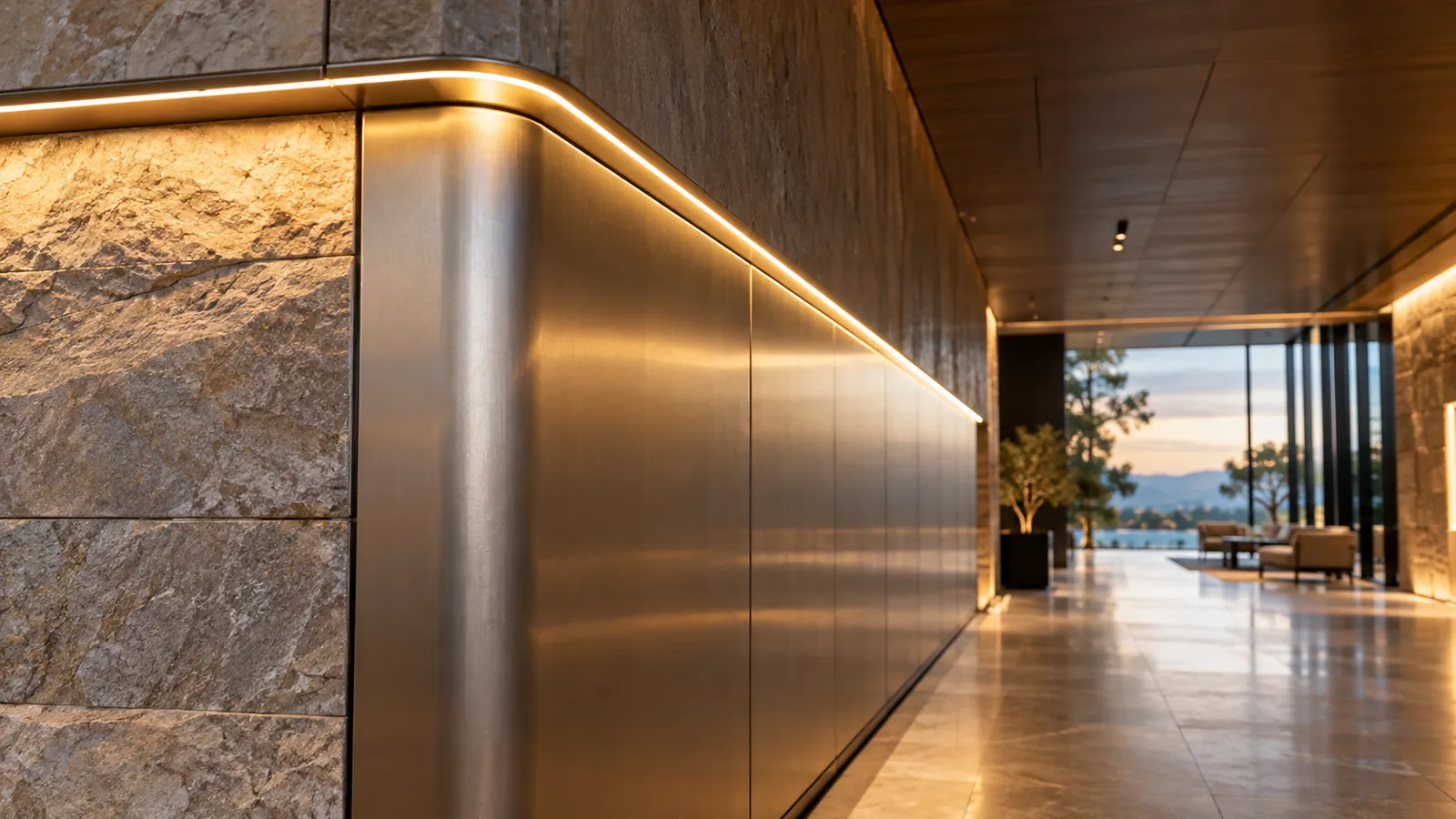
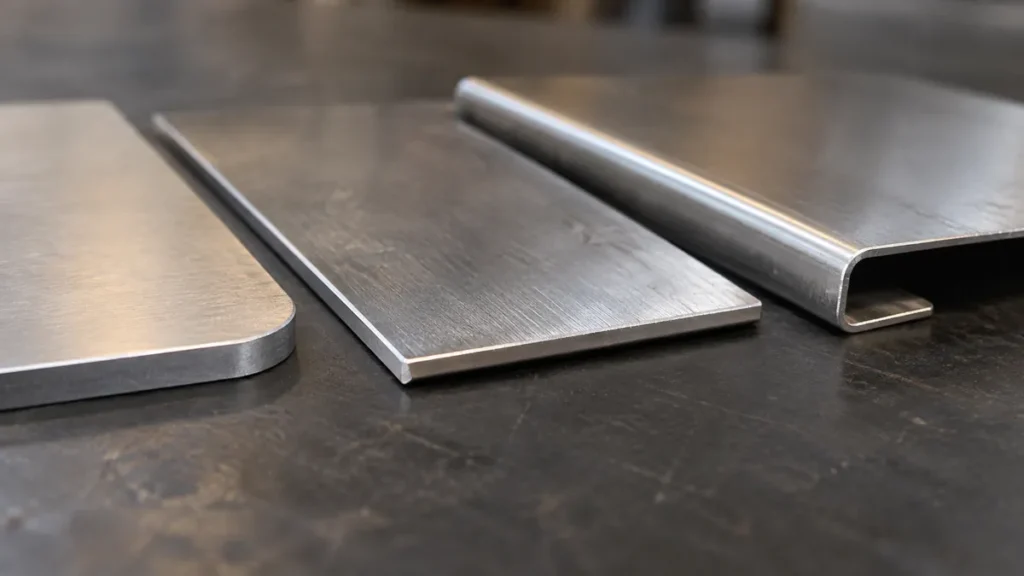
“Round edge metal panel” can describe several different parts. One buyer wants a flat panel with curved outside corners. Another wants the sharpness removed from its cut edges. A third expects the perimeter to be folded back so the exposed edge is protected. The phrase sounds straightforward until a supplier has to turn it into geometry and an inspection requirement.
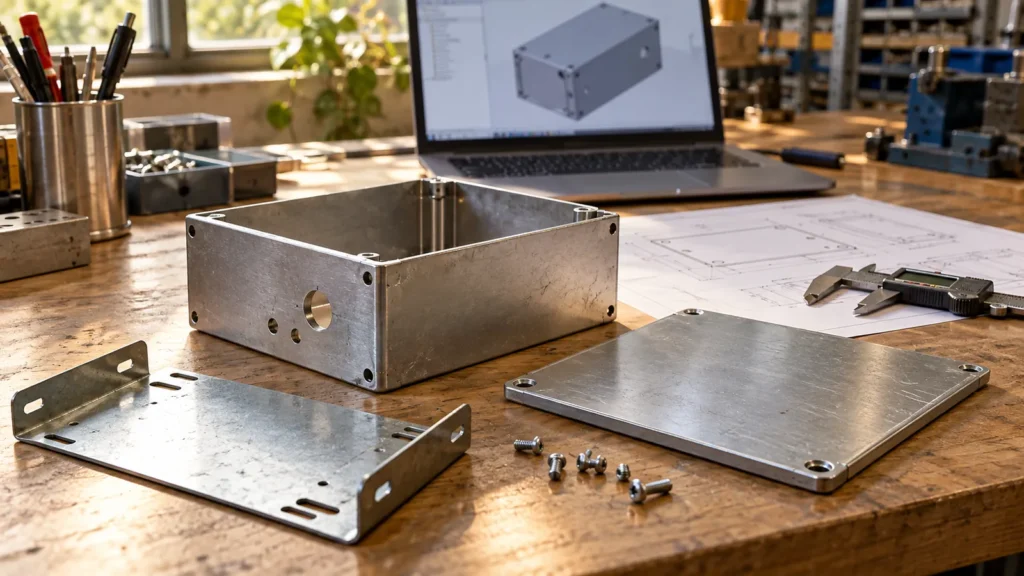
For a cover, access panel, or enclosure face, these choices affect more than appearance. They can change the fit against a frame, clearance around fasteners, coating requirements, and the space available behind the panel. A drawing needs to separate them.
Begin with the view that shows the radius
A rounded corner in the front view changes the panel’s outline. The straight edges transition through a specified arc instead of meeting at a sharp point. This can provide clearance against a rounded frame or give the panel its intended appearance.
The cut edge still extends through the sheet thickness. Rounding the outline does not define the treatment of the upper and lower edges of that cut surface. The corner may look soft from across the room while its perimeter still needs deburring or a specified edge finish.
A hypothetical wall-mounted control cover illustrates the difference. Its frame has rounded inside corners, so the cover needs compatible outside corners and assembly clearance. People will also handle the cover during maintenance. The front-view radius addresses the first requirement. The edge treatment addresses the second. Putting only a corner radius on the drawing leaves the handling requirement unresolved.
Specify the corner radius on the relevant view and dimension the overall envelope. Where a corner meets a straight edge, show a clean geometric transition. If a mating frame already exists, provide its drawing or measured geometry for review rather than selecting a radius because it looks appropriate in a rendering.
The flat outline can be discussed with ZhenPai through its cutting and punching services. The cut profile and the subsequent edge condition should be separate points in that review.
Deburring and edge rounding need separate words
Deburring removes unwanted raised material left by manufacture. Edge breaking or edge rounding deliberately modifies an edge. A simple deburring instruction may be sufficient for one internal component, while an exposed part needs a more defined edge profile.
Timesavers describes edge rounding as creating a radius on the metal edge and distinguishes it from lighter edge-breaking operations. Its discussion also identifies handling and coating as reasons for specifying edge rounding. The relevant lesson for a drawing is to request the intended edge condition explicitly; a corner radius in the panel outline does not specify it. Timesavers edge-rounding guidance
If a radius through the thickness is important, define it in a section or detail view. If a chamfer is acceptable instead, state that choice. Do not give the supplier a radius symbol and expect a chamfer to count as the same shape. When either treatment is acceptable, the drawing can say so within limits approved by the designer.
Avoid a blanket instruction to round every edge without checking the functions. A gasket seat, close-fitting slot, or locating feature may require a different condition from an exposed perimeter. Edge finishing removes material, so it should be reviewed wherever the remaining shape affects fit.
A hem changes the panel itself
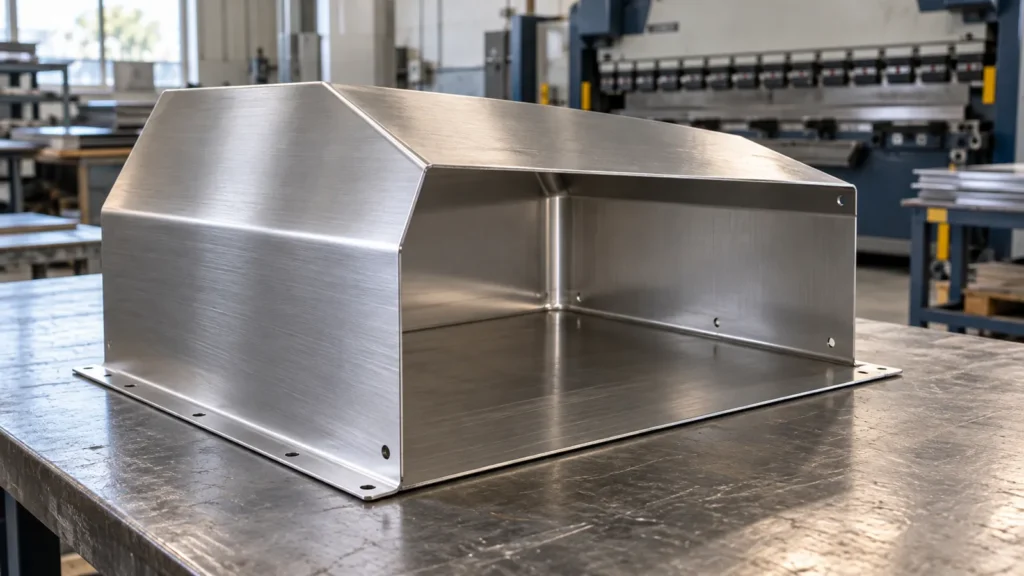
A hem returns the sheet edge toward the panel. It is a formed feature with a cross-section, not merely a smoother cut edge. A designer may choose it for an exposed perimeter or to alter the stiffness and shape of the panel, but it also occupies space.
TRUMPF explains that folding and hemming turn sheet edges over and can provide stability or edge protection. Its description distinguishes a folded edge with a remaining gap from a hem pressed together. That terminology helps start a discussion, but the drawing should show the required section so the intended shape is clear to every supplier. TRUMPF bending applications
A returned edge can interfere with a screw head, frame lip, clip, or component behind the panel. It also affects the local thickness and the surface on which the panel sits. For the hypothetical control cover, adding a hem after the frame has been finalized could stop the cover from seating as intended.
Show the return length, gap or closure condition, direction, and finished envelope. The material and thickness influence what can be formed, so review the detail with the supplier before freezing it. Do not assume that a hem shown in one material can be reproduced unchanged in another.
A bend radius answers a different question
A panel with a turned flange has a bend radius in its cross-section. That radius describes the curved region where the sheet changes direction. It does not describe the round corner visible in the front view, and it does not establish that the remaining cut edge has been finished for handling.
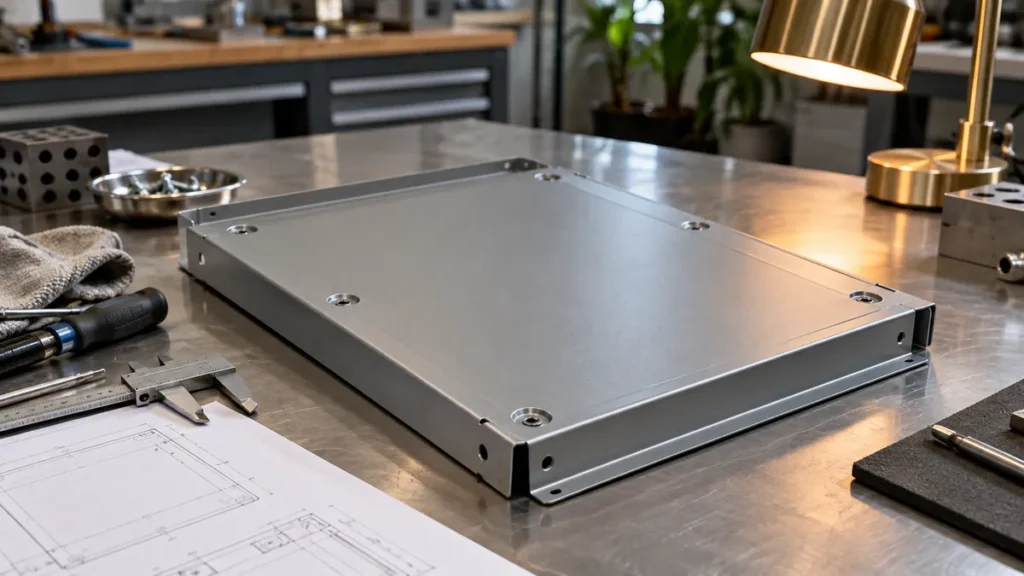
For a tray-shaped cover, all three may appear on the same drawing: rounded plan-view corners, flange bend radii, and an exposed-edge treatment. Keep their callouts attached to the right features. If the bend radius is dimensioned from the inside surface, make that clear rather than leaving the reader to infer which curve the value refers to.
Corners where flanges meet deserve a detail view. The flat pattern, reliefs, and formed corner need to work together. A visually closed corner in a model may still require a manufacturing decision about clearance, joining, or finishing. Review those junctions alongside the bending and stamping details, particularly where a return or hem approaches another formed edge.
Define the handling requirement for the actual use
“Safe edge” is a requirement to discuss, not a complete manufacturing instruction. A panel handled during assembly has different contact conditions from a frequently removed access cover. A hidden cable opening has another concern: its edge may contact a wire or protective sleeve.
Identify the edges people or other components can reach, and explain the expected contact. The designer can then select the geometry and acceptance criteria. The required treatment might differ around a single panel; the visible perimeter, internal cutouts, and protected mounting edges do not automatically need identical processing.
For the hypothetical cover, a useful review would cover the removable perimeter, the connector opening, and the formed corner junctions. It would also identify which edges become inaccessible after installation. This makes the request specific enough to evaluate without pretending that one drawing note guarantees every aspect of the finished product’s safety.
A finish is another part of the requirement. If the panel is coated, define which dimensions and edge conditions apply before finishing and which apply afterward. A coating should not be treated as a substitute for the approved underlying edge treatment. Show any close-fitting or contact areas that need particular attention.
Inspect the feature you actually ordered
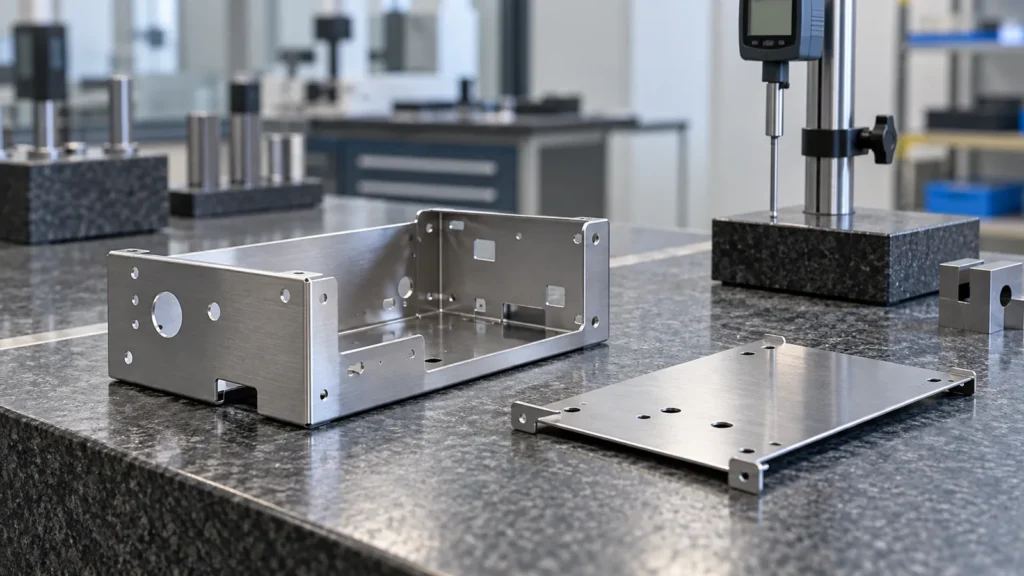
Inspection should follow the separate requirements. Check the outside corner geometry against its drawing. Check a specified thickness-edge radius or chamfer at suitable locations. Check the formed return and final envelope where a hem is present. A general visual approval of the panel cannot establish all three.
Agree on how corner transitions, internal openings, and edge intersections will be evaluated. If an approved sample is used for appearance or edge feel, identify its revision and the features it represents. A sample can support a defined specification, but a casual hand test is a poor substitute for an agreed acceptance method.
Discuss those checks during the quality-control review. The supplier needs to know which features require recorded measurements and which have agreed visual criteria before production begins.
ZhenPai supports customer-drawing production, design, and 3D modeling within its capabilities. Submit the panel drawing or model, material, quantity, mating information, and the intended edge conditions through the contact page. A front view plus the necessary section details will do more for the result than the words “round edge” alone.