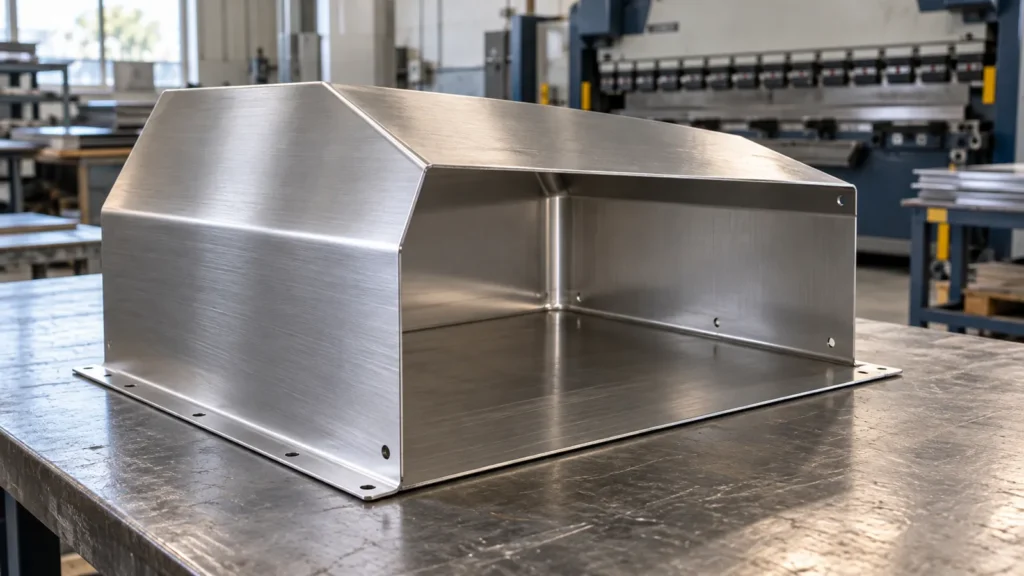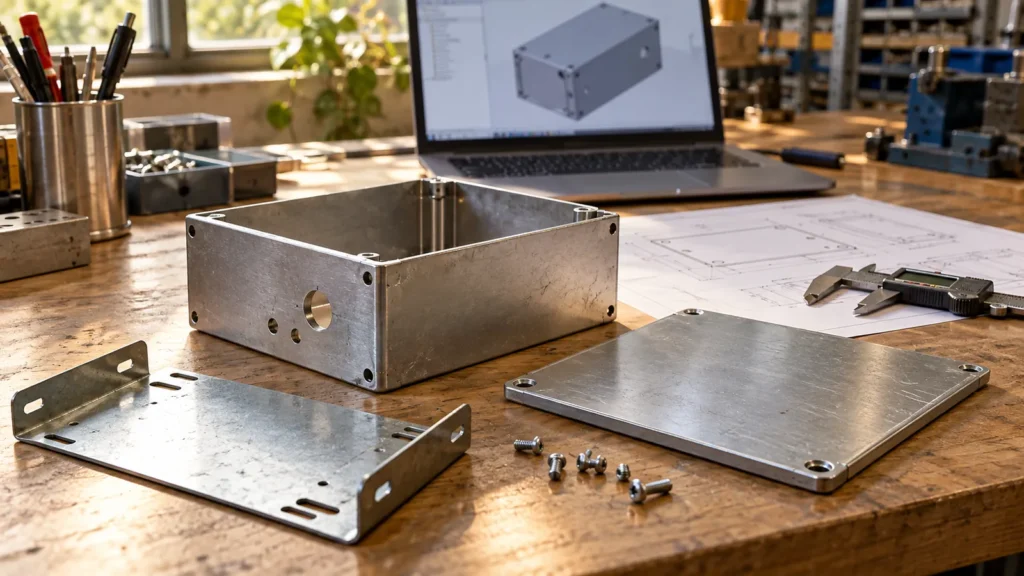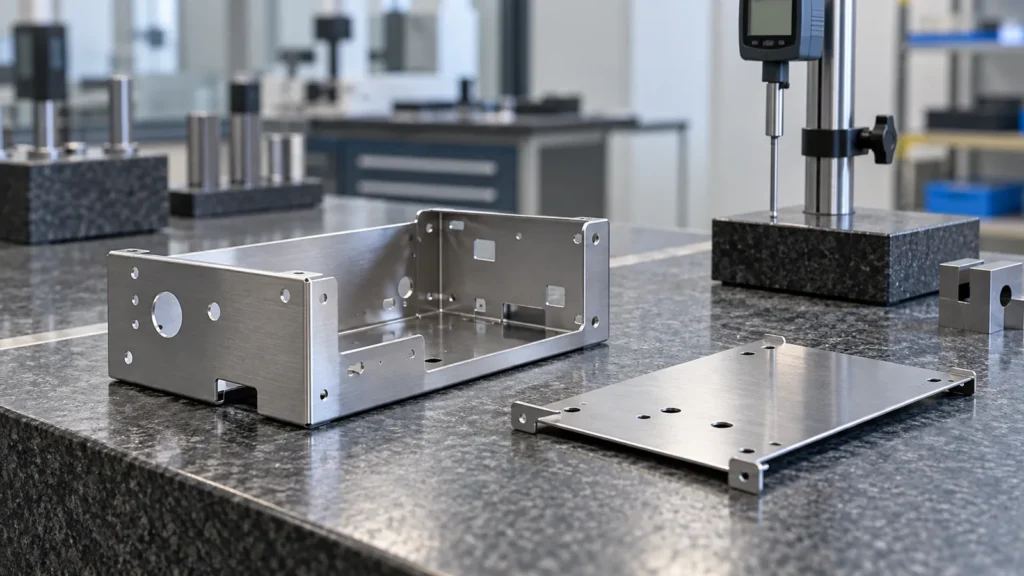


Aluminum fabrication turns aluminum stock into components through processes such as cutting, forming, joining and finishing. For OEM sheet metal projects, successful fabrication starts with the application: how the part mounts, what it protects, which surfaces are visible and how it fits the surrounding assembly.
A lighting housing, equipment cover and mounting bracket may all use aluminum, but their manufacturing requirements can be very different. Understanding those differences helps buyers prepare clearer drawings and avoid decisions that create unnecessary work later.
What Does Aluminum Fabrication Include?
The term covers several manufacturing routes, including sheet metal work, machining, extrusion and casting. This guide focuses on fabricated sheet metal components made from flat material.
A typical component may pass through:
- Profile cutting and preparation of holes or openings.
- Bending to create flanges, channels or enclosure walls.
- Joining or hardware installation.
- Surface preparation and finishing.
- Mechanical assembly and inspection.
Some parts need only cutting and bending. Others require several components to be joined into a complete housing or support structure. The manufacturing route should follow the geometry and function of the part.
For example, an access cover needs a reliable mounting interface and convenient removal. A lighting housing may also need space for optical components, wiring and maintenance. Those requirements should be reviewed before the flat pattern is released.
Applications Beyond a Standalone Part

Aluminum components often become part of a larger product or installation. Their value depends on how well they work with neighboring parts.
Lighting housings and covers
Formed aluminum can be considered for mounting trays, covers, brackets and housing sections. The design needs to accommodate the lighting components and installation method. Thermal performance must be assessed for the complete fixture; choosing aluminum alone does not establish a cooling solution.
Equipment panels and protective covers
Panels may combine ventilation openings, access features and mounting points. Visible surfaces need an agreed appearance standard, while internal interfaces need suitable clearances and fastening access.
Brackets and supporting components
A bracket must transfer load through its mounting features. Hole locations, flange geometry and the connection to the surrounding equipment matter as much as its outside dimensions.
| Application | Drawing detail to define early | Reason |
|---|---|---|
| Lighting housing | Component envelope, mounting points and service opening | Prevent interference and preserve maintenance access |
| Equipment cover | Mating edges, fastener locations and visible surfaces | Support fit and consistent appearance |
| Mounting bracket | Load direction and installation interface | Establish which dimensions affect function |
| Removable panel | Removal path and tool access | Make servicing practical after installation |
Select the Alloy and Temper Together
A drawing that specifies only “aluminum” leaves important decisions unresolved. The alloy, temper, thickness and required surface condition should be stated together.
5052 is a common sheet alloy used in applications such as cabinets and architectural components. Its available tempers have different forming characteristics. Supplier guidance also shows that bending recommendations change with thickness and temper, rather than following one universal radius. Atlas Steels 5052 material data
6061 is another widely used alloy, with several available tempers. A higher-strength temper can require a different approach to forming. Tight bends in 6061-T6 deserve specific review before production. Aluminum fabrication and forming considerations
Material selection should answer four questions:
- Does the part require substantial bending?
- Will it be welded or mechanically joined?
- What environment will it encounter?
- What strength, appearance and finish requirements must it meet?
If an alternative material is proposed, approve it explicitly. Similar-looking sheets should not be substituted without checking the drawing and application requirements.
Design for Fabrication Before Releasing the Drawing
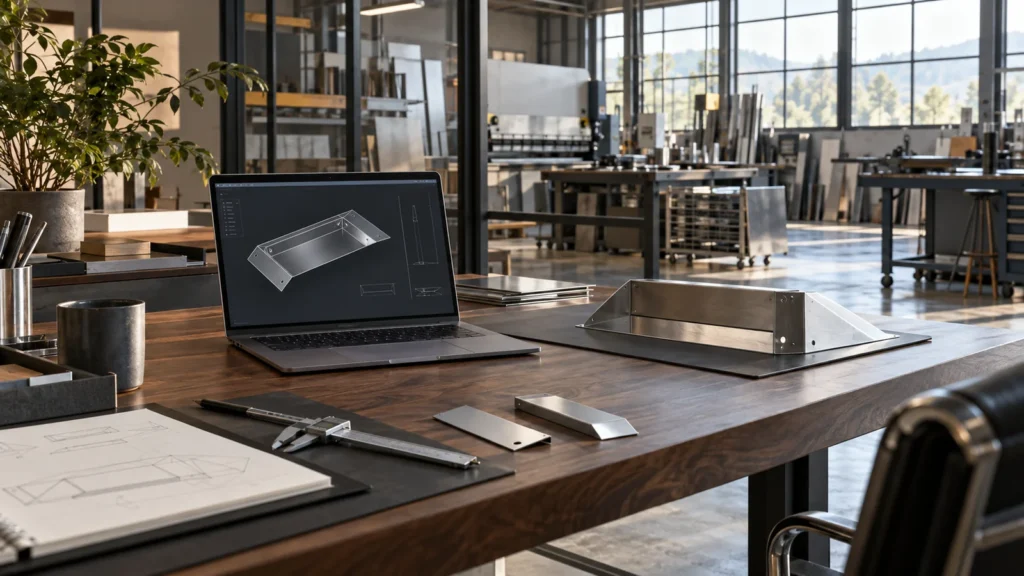
A 3D model helps communicate the finished shape, but the manufacturing review also needs to consider how that shape will be produced.
Review the bending sequence
Check that each flange can be formed with available tooling and that previously formed features will not obstruct later operations. Short flanges, closed shapes and closely spaced bends may require changes to the design or production sequence.
Protect important holes and interfaces
Holes near bends can be affected during forming. Identify which holes locate the part, which provide clearance and which carry hardware. The fabricator can then review their position relative to the bend zones.
Define functional dimensions
Use the mounting face or another meaningful reference to locate critical features. A long chain of dimensions across several bends may make the final interface harder to control.
Consider assembly access
Confirm that tools can reach the fasteners and that components can be installed or removed in the intended order. A housing can look complete in a model while leaving too little space for actual assembly.
These reviews connect cutting and punching with the subsequent bending and forming operations.
Plan Joining and Finishing as Part of the Design
The joining method should reflect the required strength, appearance and service access.
Welding can create a permanent assembly, but it introduces heat and may affect geometry. Mechanical fastening can support disassembly, though it requires accessible hardware and properly defined mating features.
Finishing also changes the manufacturing plan. Specify the coating or treatment, color, texture and cosmetic surfaces. Identify threads, close-fitting interfaces and electrical contact areas that need appropriate treatment or masking.
For outdoor components, discuss the environment in practical terms: rain exposure, condensation, cleaning chemicals, coastal conditions or contact with other metals. The material and finish should be evaluated against those conditions rather than described with a general promise of weather resistance.
What Should an OEM Buyer Send for a Quote?
A useful inquiry combines the drawing package with application information.
Include:
- A dimensioned drawing and available 3D model.
- Alloy, temper and thickness.
- Quantity and expected repeat-order requirements.
- Required finish and visible surfaces.
- Mating components or interface dimensions.
- Critical tolerances and acceptance criteria.
- Prototype approval and packing requirements.
If the design is still developing, include the installation space, intended function and reference sketches. This allows the design discussion to begin before every dimension has been finalized.
Inspection should follow the features that affect fit and function. Zhen Pai’s quality control approach connects drawing requirements with the agreed inspection scope.
Frequently Asked Questions
Can aluminum fabrication be used for lighting housings?
Yes. Fabricated aluminum may be suitable for housing sections, covers and mounting components. The complete fixture still needs review for installation, thermal performance, environmental protection and service access.
Does an aluminum part always need a coating?
No single finish suits every application. Alloy, appearance, exposure and contact with other materials influence the decision. Specify the intended environment and confirm the finish during the manufacturing review.
Can Zhen Pai help before the drawing is complete?
Zhen Pai offers sheet metal design and 3D modeling. Share the intended use, approximate dimensions and mounting requirements to discuss the development scope. Production requirements should be approved before fabrication.
Discuss Your Aluminum Fabrication Project
Zhen Pai connects sheet metal design, 3D modeling and custom manufacturing in Jiangmen, Guangdong, China. Whether you have a concept to develop or drawings ready for review, send your project requirements to discuss the material, fabrication route and next step.