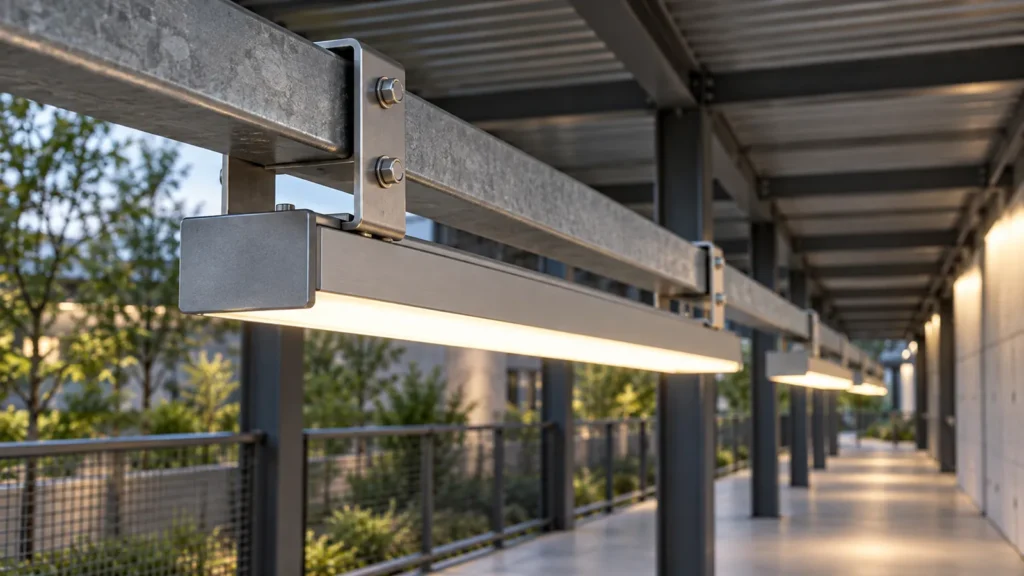

A black ceiling trim can disappear when the light is off and show every joint when the fixture is switched on. A wall panel that looked right on a desk may seem much glossier once it sits beside the next panel. For lighting and architectural products, black sheet metal needs an appearance brief that describes the installed object, including its edges, joints, and neighboring surfaces.
The color is an early decision. Material, finish, and construction still need to be chosen around the product. A useful starting point is a physical reference and a clear explanation of where the part will be seen.
Decide what the word “black” describes
Black sheet metal is a broad purchasing term. A designer may mean steel with a dark rolled surface, painted steel, coated aluminum, or another metal with a specified black finish. Those options do not become interchangeable because they look dark in a photograph.
Hot-rolled steel is one source of confusion. SSAB defines oxide scale as iron oxide formed on the surface of hot-rolled steel. That manufacturing surface is a different requirement from an applied cosmetic black finish. SSAB steel glossary
If the intended product deliberately retains a rolled appearance, approve that appearance and the proposed treatment as a system. If it needs an even black face, state the base metal and the finished surface separately. “Black steel” leaves room for a supplier to interpret a material description as an appearance requirement, or the reverse.
Choose the base material for the part’s actual job. A suspended trim, a wall-mounted access panel, and a fixture mounting plate have different requirements for weight, stiffness, attachment, and service environment. The selected grade and thickness belong in that decision. An approved black sample cannot establish whether the underlying metal is appropriate.
The finish route also needs confirmation. Powder coating may be suitable for a particular project; other projects may use a different coating or surface treatment. Identify the intended system and ask the manufacturer to review it with the selected metal and fabrication sequence.
Look at the surface in the light it will receive
Consider a hypothetical recessed light with a narrow black border. In a ceiling mock-up, light falls almost parallel to one edge. That viewing condition can reveal a surface texture or joint step that was barely noticeable under diffuse room lighting.
Review a representative part in that position. Include the light source, viewing angle, and adjacent materials where practical. A small color chip helps communicate a color choice, but it cannot show how a folded corner or a broad face will look on the finished assembly.
Specify the desired gloss and texture along with the color reference. A fine texture, a smooth matte surface, and a glossy surface give different visual results. If the design depends on one of them, use a sample that actually represents it. Calling all three “black” postpones an important product decision.
Directional appearance deserves attention when the chosen substrate or finish has it. Mark the required direction on adjoining pieces and review their orientation together. Do not add a grain requirement to a finish that has no intended directional character; describe the appearance the product needs.
Describe the lighting or architectural use when discussing the part with ZhenPai’s team; the industry applications page outlines its areas of work. Include a simple installed view so the conversation covers the surfaces people will actually see.
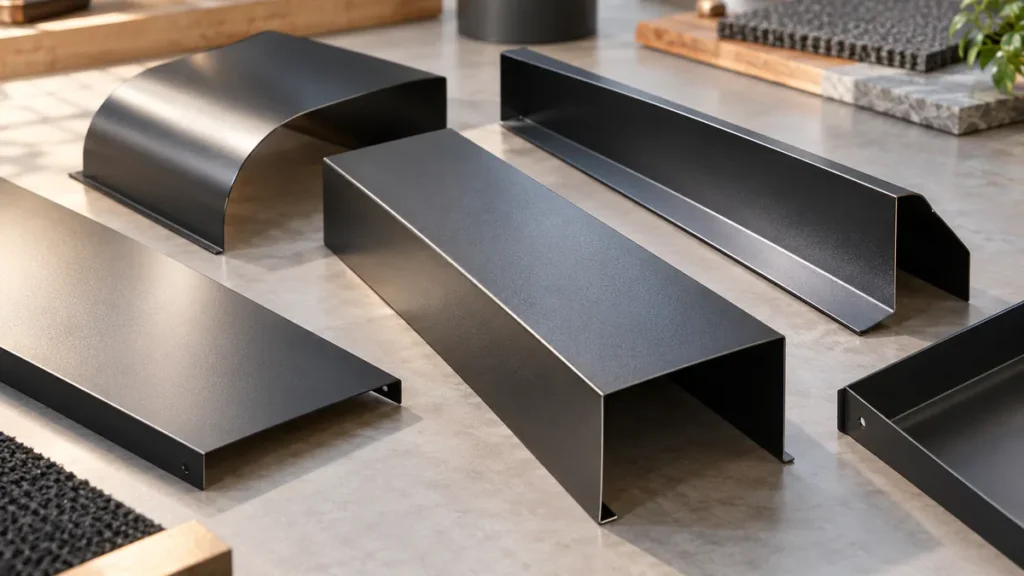
Carry the appearance around the edge
A black face with an unaddressed bright edge can change the whole effect of a thin trim. Decide whether the perimeter is exposed, tucked behind a neighboring component, or returned away from view. The answer affects both the construction and the required finishing sequence.
If prefinished sheet is proposed, ask what happens to the cut edges and formed areas. If finishing is planned after fabrication, agree which edges and recesses need coverage. Avoid approving a face sample while leaving the perimeter condition undefined.
A small return flange can hide a cut boundary and provide a more substantial visual edge, provided the shape is practical to form. It also changes the space available behind the trim. Review that return with the mounting arrangement and any required access rather than adding it solely to improve the front view. When discussing bending and stamping, show which folded surfaces remain visible in the completed fixture.
Fasteners create another interruption in a black surface. Show whether they are visible and whether their heads must match, sit below a cover, or remain accessible. Where a connection requires an uncoated contact area, define that area with the responsible product designer. A black appearance specification does not establish an electrical or mechanical contact requirement.
Approve adjoining pieces together
Two acceptable individual parts can look mismatched when their edges touch. This matters on continuous wall trims, grouped fixture bezels, and removable panels surrounded by fixed metalwork. Set the appearance expectation for that assembled relationship.
For a project using powder coating, AkzoNobel’s Interpon guidance acknowledges possible batch differences and advises a single powder batch for parts assembled together. Its guidance also identifies substrate and film thickness as possible influences on appearance. Interpon D2525 Gloss technical data
That advice supports planning; it does not replace approval of the finished parts. Ask how the chosen finish will be managed over the expected production schedule. If deliveries will be split, keep a reference that later runs can be compared against. Record the agreed finish identity so a reorder does not rely on “the same black as last time.”
Evaluate the joint as well as the color. A narrow shadow gap may be intentional. A raised seam may catch light and become conspicuous. For a hypothetical row of fixture trims, arrange several samples in their intended sequence and view them from the normal occupied space. That reveals the combined effect of surface, alignment, and spacing.

Include removal, handling, and delivery in the sample review
A visible panel may be handled repeatedly during installation or servicing. Work through that operation with a sample. Can it be removed without dragging its face across a bracket? Where will the installer hold it? Does a concealed fixing require a tool to pass close to the finished surface?
These questions can lead to modest construction changes: an accessible fastening point, a little more clearance, or a place to support the part while it is attached. They belong in the product review before the appearance sample is accepted for production.
Agree packaging around the exposed surfaces. Parts that nest efficiently may place an edge directly against the face of the next piece. Discuss separation and protection suited to the actual shape, including how the parts will be unpacked. Review protective material for compatibility with the selected finish rather than specifying an adhesive film by habit.
Keep the approved sample identifiable and record what it represents: material, finish, visible faces, edge treatment, and revision. ZhenPai’s quality control discussion can then address both the appearance reference and the functional checks required for the component.
A lighting trim or architectural panel can involve several connected operations. Discuss the complete component with ZhenPai so its manufacturing services review covers the visible returns, attachment, and finish together. To develop a custom black metal part, send ZhenPai the intended application, design files, and an appearance reference.